A device with intelligence.
Bring hardware, firmware and software together in a connected appliance, controller or purpose-built product.
- Hardware and component selection
- Embedded logic and user interfaces
- Network and cloud connectivity
Custom product development · Anil Chandra K
Hardware, software and the thinking that connects them. I help turn your requirements into practical products and systems—designed around how you need them to work.
From an early idea to a prototype, an integrated system or a product ready for deployment.
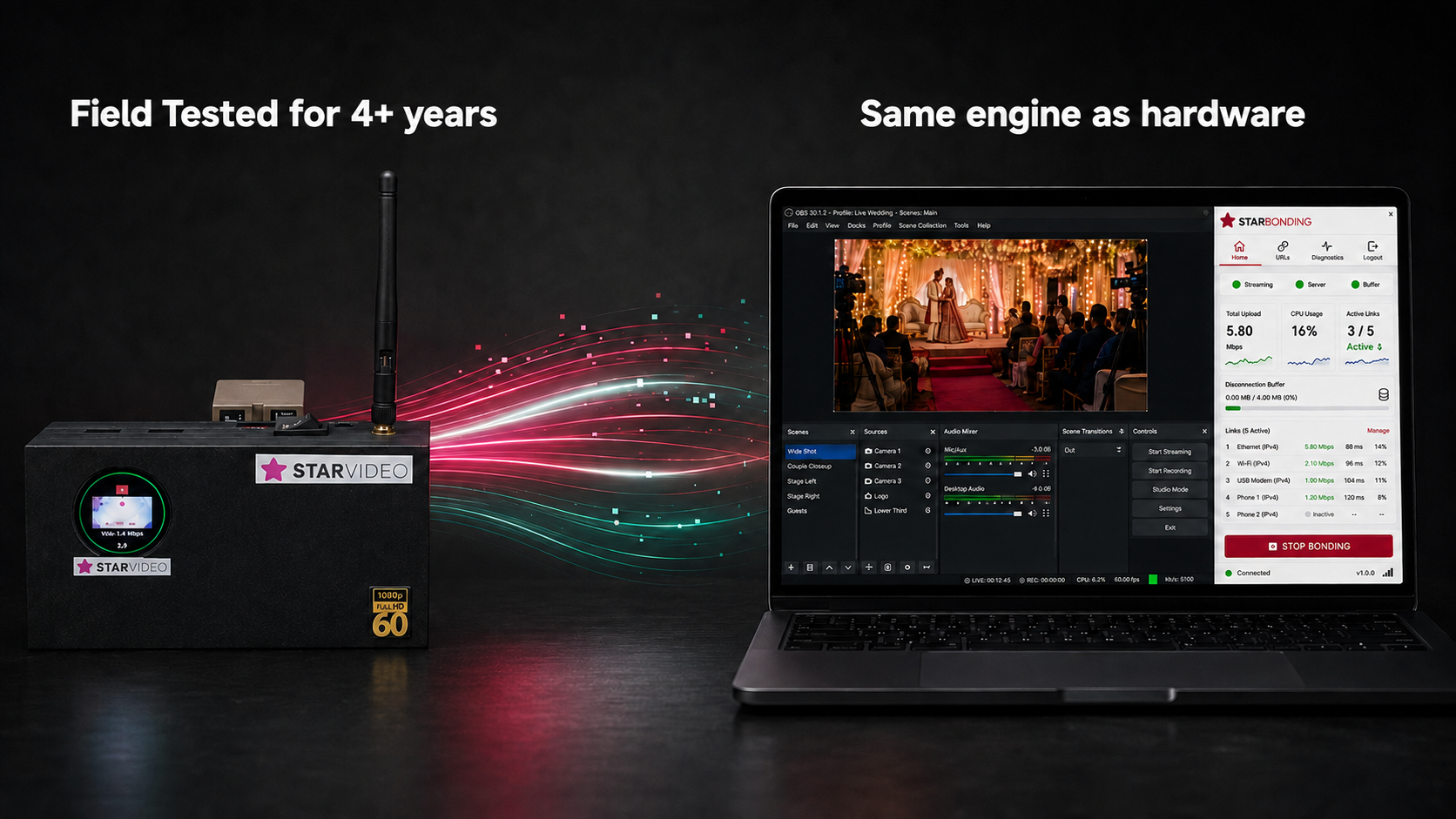
Star Video's streaming and network bonding work brings devices, native applications and server software together.
Explore the engineeringStart with what you need to achieve
You may need a new device, a software platform, a bridge between existing systems or a better version of a product you already have. The work starts by understanding your requirements and constraints.
Bring hardware, firmware and software together in a connected appliance, controller or purpose-built product.
Develop applications and services around your workflow, performance needs and operating environment.
Connect devices, networks and applications so information and control move reliably through the complete system.
Investigate the architecture, find bottlenecks and reconsider costly or complicated parts of an existing solution.
How I approach engineering
A product has to work as a whole. I look at the data, control flow, interfaces and operating conditions before deciding what to build.
Use available hardware where it fits. Develop custom parts where they add value. Keep complexity, cost and maintenance in view throughout.
Who will use it? What must it do? What are the limits on cost, power, connectivity, response time and installation?
A software problem may have a hardware solution. A hardware requirement may be handled more simply in software. Explore both before committing.
Define states, interfaces and failure handling. Aim for systems whose operation can be understood, measured and diagnosed.
Build a useful prototype, test the assumptions and study the results. Refine the design using evidence from the intended operating environment.
Breadth with a systems foundation
Decades of hands-on work across computing, communications and electronics help me choose an approach that fits the entire product.
Hardware design, firmware, IoT, power electronics, device control and integration with host software.
C development, Linux internals, server components, high-volume queues, caching and performance-sensitive software.
Broadband systems, network bonding, Wi-Fi, live-streaming workflows, VoIP, hosted IVR and messaging middleware.
Windows and mobile applications, PHP web applications, APIs, CRM, reporting systems and database integration.
Statistical analysis, applied mathematics, data processing and artificial intelligence where the problem calls for it.
Compilers, interpreters, scripting languages, API design and reengineering of technology and business processes.
An example from Star Video
Live streaming over inconsistent networks calls for more than an application. The devices, network transport, server software and operator controls all have to work together.
Star Video and StarBonding illustrate this breadth: streaming appliances, network bonding software and the services that connect them.
A COMPLETE PRODUCT, LAYER BY LAYER
Video inputs, connectivity, power and operator controls.
Capture, configuration, monitoring and workflow.
Multiple connections and changing network conditions.
Services that complete the path to the streaming destination.
Technologist.
Product developer.
Serial entrepreneur.
Experience that crosses boundaries
My work has moved across electronics, broadband, communications, systems software and product development. That breadth helps me connect ideas between fields and see alternatives that may be missed when a problem is viewed from only one discipline.
I have run an ISP, developed Linux-based bandwidth management systems, worked with startups and built products through Star Video. Along the way, I have brought together specialist developers and technologists when a project calls for additional expertise.
I remain a hands-on developer, with C at the centre of my systems work. I value explicit logic, practical architecture and a clear understanding of how a system behaves.
“To positively contribute to the quality of life of people.”
My guiding purpose
A clear path through development
Discuss the use case, existing systems, operating conditions and commercial constraints.
Agree the architecture, scope, milestones, responsibilities and acceptance criteria.
Build the hardware and software elements, integrate them and test the complete workflow.
Address test findings and complete the agreed documentation, deployment and support arrangements.
Before we begin
No. Start with the problem, who will use the solution and what you need to achieve. We can work through the technical requirements and possible approaches together.
Yes. A typical solution may combine hardware selection or design, embedded firmware, native or web applications and server components. The specific work is agreed for your project.
Yes. An existing board, device or component may be the most practical choice. Custom hardware can be considered when the requirements justify it.
Yes. We can discuss integration, performance issues, reliability, cost reduction or a change in architecture. Existing documentation, source access and reproducible problem details help establish the scope.
Anil leads the technical discussion and engineering direction. Specialist collaborators may be involved according to the needs and agreed scope of the project.
These are agreed after understanding the requirements. The proposal should define the work, milestones, deliverables, commercial terms, intellectual property arrangements and support responsibilities.
TechDev is for custom development assignments. Technology partnerships in return for equity are handled through TechAccel, a separate initiative within Star Video.
Let's start with your requirement
Describe the problem in your own words. Include what you already have, what you want to achieve and the constraints that matter.
Discuss on WhatsAppIntended users · Current setup · Required functions · Hardware or software constraints · Target budget and timeline, if known